What customers say
NorCal Solar ServicesSolar design and installation · San Joaquin County, CA
Serving San Joaquin County and nearby towns
★★★★★4.4 from 7 Google reviews
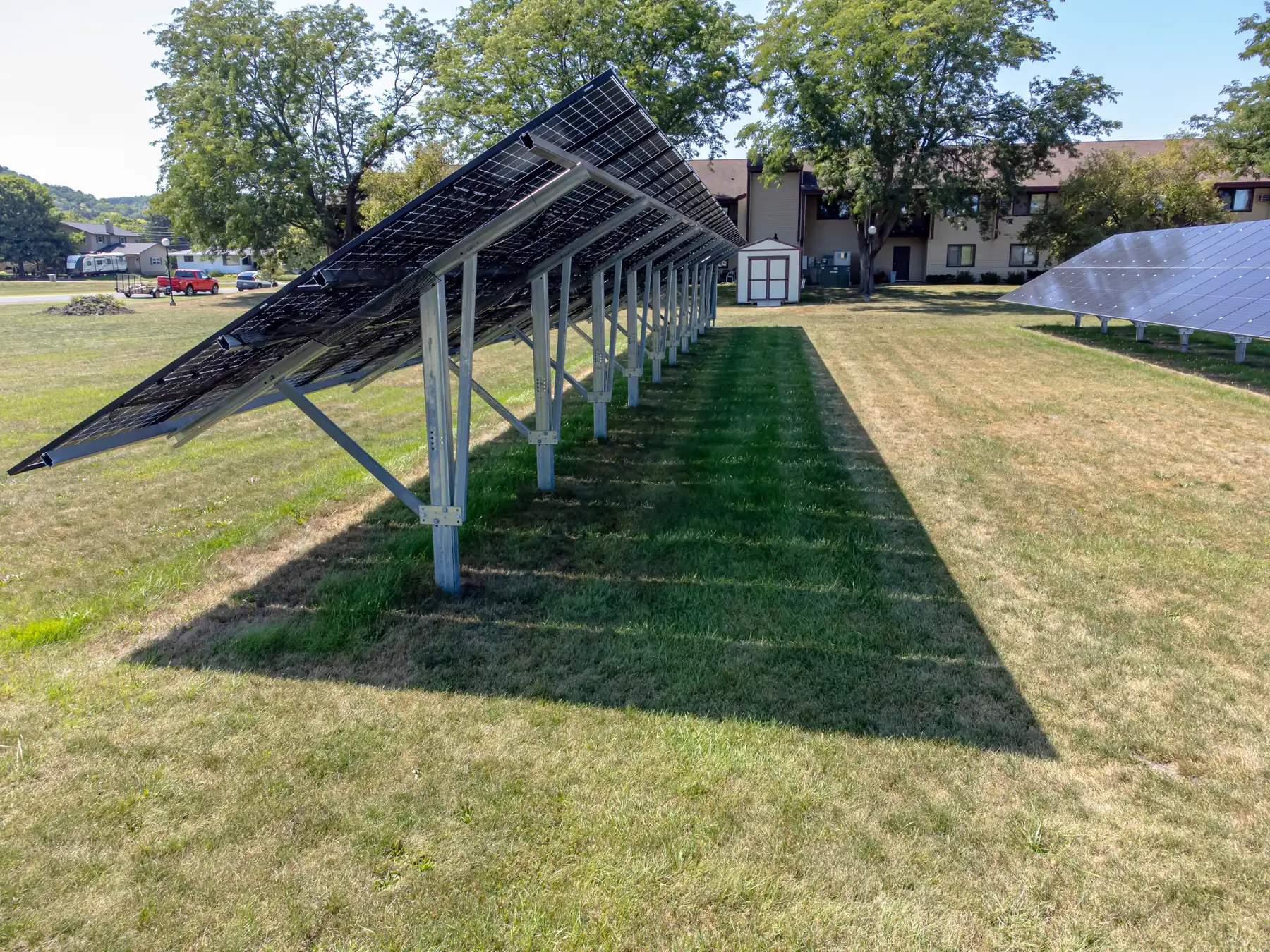
Private website concept. NorCal Solar Services is shown here as a proposed ground-mount and rural-property solar service, not an operating company.
Stockton, California
NorCal Solar Services is a solar installation service for Stockton-area homes on acreage, with a well, a shop or both. It would compare house roof, shop roof and ground mount in one written site plan with trench, setbacks and meters. Request a quote to see ground work priced line by line.
San Joaquin County, California
NorCal Solar Services works the rural parcels of San Joaquin County, comparing the house roof, the shop roof and a ground mount in one site plan, with the trench, the setbacks and the meter location drawn on it.
What customers say
Serving San Joaquin County and nearby towns
★★★★★4.4 from 7 Google reviews
What we do
Call or visit
| Phone | (209) 323-0824Call to book an assessment. |
|---|---|
| Estimates | Free, in writingDesign and price as separate documents. |
Why homeowners pick us
Our story
Serving San Joaquin County, Lodi, Manteca, Tracy and the surrounding rural parcels.
The line from a ground mount to the panel is where acreage jobs gain cost: trench, conduit and thicker wire. Set the distance and the inverter size to see which copper conductor keeps the voltage drop under your target.
Illustrative check, not a design. Copper in conduit, 240 V single-phase, ampacity from NEC Table 310.16 (75 °C) at 125% of output, resistance from NEC Chapter 9 Table 8. The drop target is a design choice, not a code limit. The installer and the permit reviewer size the real conductors. Runs on this device.
Smallest copper conductor for this run
#4 AWG copper
Long runs are often built in aluminium, which needs a larger size than copper. Ask for the conductor size and the voltage-drop figure in the quote, priced as their own line.
On a property with a house, a well pump and a shop, a solar array has three possible homes: the house roof, the shop or barn roof, or open ground. Ask every solar installer in Stockton who bids on the job to price the location they recommend and to explain, in writing, why the other two lost. Two quotes for different locations are not comparable until you know that.
A ground mount (panels on a metal frame anchored in the soil) adds work a roof does not need: foundations, a trench back to the panel and longer wiring. Pay for that only when it solves a problem the roof cannot.
Extra output is a weak reason on its own. The PVWatts model (National Laboratory of the Rockies, formerly NREL), run for downtown Stockton with no shade, puts a south-facing ground mount at a 30° tilt at about 1,653 kWh per kW of panels per year, and a south-facing roof at a 22° pitch (about 5:12) at about 1,634 (modeled estimate, PVWatts). That is about 1% more. Against a roof that faces only east or west (about 1,390 and 1,392, modeled estimate), the ground mount yields about 19% more.
So the strong reasons to choose ground are physical: an orchard row, windbreak or valley oak that shades the roof in winter; a house roof that is too small or due for replacement; or a shop and well pump far from the house that could share one array. The U.S. Department of Energy's homeowner's guide to going solar lists the same roof checks: age, tree cover, size, shape and slope.
| Location | When it wins | Extra work to price | Permit route inside city limits |
|---|---|---|---|
| House roof | Open south, east or west faces with years of roof life left | Roof repair, if due, as its own line | City's instant route if the system qualifies |
| Shop or barn roof | The shop has the open roof, or the shop and well use most of the power | Structural check of the shop roof; wiring to the meter it serves | Regular plan review expected |
| Ground mount | Shade, a weak or small roof, or loads spread across the parcel | Piers or footings, racking, trench and conduit, larger wires, often a subpanel | Regular plan review |
How we work. A desk check, then a visit. Durations are illustrative.
Of the three things to prepare, the bills matter most. Without one for every meter, nobody can say which meters a single array can serve.
How we work. After the visit, we hand over five documents:
Optional lines, priced separately: trench beyond the base run, a structural letter for a shop roof, gravel or weed barrier under the array, fencing, monitoring, a battery and a main-panel upgrade.
A ground-mount total looks expensive next to a rooftop price, so split it before you judge it. Ask for these as separate lines:
Then subtract those lines from the total and divide what is left by the system's DC watts. DC kW is the panels' rated capacity: panel wattage times panel count. Price per watt ($/W) lets you compare bids of different sizes.
Compare the result with a benchmark built for that job. The EcoGen Solar Cost Index is a modeled installed price per watt for a representative residential system, before incentives; EcoGen calls it a state benchmark, not a quote for your home. Its September 2026 Edition puts California at $2.85 per watt (State benchmark; prices as of September 25, 2026; cash, host-owned, solar only, batteries priced separately). EcoGen has no Stockton figure, so treat it as a state yardstick, and take any battery or panel upgrade out of the bid before you compare.
Illustrative calculation · not a quote. A Stockton-area home on two acres gets one bid for an 8.0 kW DC ground-mounted array beside the shop: $30,400 cash before incentives (illustrative). Four ground-specific lines (illustrative): trench and conduit, 160 ft to the house panel, $4,000; concrete piers and racking footings, $2,800; larger conductors for voltage drop, $700; a shop subpanel, $1,300. Together: $8,800.
- Whole bid: $30,400 ÷ 8,000 W = $3.80/W. Against the $2.85/W state benchmark, that looks about 33% high.
- Array only: ($30,400 − $8,800) ÷ 8,000 W = $21,600 ÷ 8,000 W = $2.70/W, about 5% under the state benchmark. The array is priced normally; the premium is the ground work.
- Is the ground work worth it? Modeled estimate (PVWatts, no shade): 8.0 kW × 1,653 = about 13,200 kWh a year on a south ground mount, against 8.0 kW × 1,390 = about 11,100 kWh on an east- or west-facing roof. The gain is about 2,100 kWh. If every extra kWh replaced power bought at California's average of about 32¢ (EcoGen, citing EIA), that is at most about $680 a year, so the $8,800 premium takes about 13 years to repay on yield alone, and longer for kWh exported at single-digit credits. Against an open south roof, the gain is about 150 kWh a year, worth at most about $50, so the premium would take more than a century to repay.
- Decision: choose the ground mount for a reason the roof cannot meet: shade, a roof too small or due for replacement, or a well and shop the array can serve on the same plan.
Use the same method on any bid. If the installer cannot separate the ground lines, ask why.
Is the parcel inside Stockton city limits or in unincorporated San Joaquin County? The answer decides the office and the route.
Inside city limits. The City of Stockton's Building & Life Safety Division runs an automated route for licensed contractors: an instant review through SolarAPP+ (national software that checks a standard rooftop design and issues an approval number), then an over-the-counter permit in the City's Accela online portal, where inspections are also booked. The City limits that route to rooftop systems on the main dwelling, and SolarAPP+ lists ground-mounted systems as ineligible. So a ground mount, or an array on a shop roof, should expect regular plan review. Confirm the submittal list and timing with Building & Life Safety.
Unincorporated county. San Joaquin County says a building permit is required for solar installations, roof-mounted and ground-mounted alike. It uses SolarAPP+ for eligible systems and takes applications through its own Accela system; plans go to review after fees are paid. The County also says it will never ask you to pay permit fees by wire transfer, so treat any such request as a red flag.
| Question | City of Stockton | San Joaquin County |
|---|---|---|
| Who issues the permit | Building & Life Safety Division | Community Development, Building Inspection |
| House-roof array | Instant SolarAPP+ route if eligible | SolarAPP+ if eligible |
| Ground or shop-roof array | Regular plan review expected | Permit required; ask about Planning review first |
For a County ground mount, ask three questions before you sign: does Planning need to approve a site plan before the building submittal, is there a separate footing inspection, and does the array's weight call for a structural analysis? The permit route sheet would record what the County says for your parcel. Setbacks, flood zones and well or septic distances work the same way: the site plan shows distances; the permit office confirms the rule.
Ground mounts add digging, a fire rule and inspections that a roof job skips. Get the order in writing, with an owner for each step.
The fire rule shapes the site from day one. The 2025 California Fire Code, section 1205.5.1, requires a clear, brush-free area of 10 feet around the perimeter of a ground-mounted array, and a maintained vegetative surface or an approved noncombustible base under the array, as the fire code official approves. In a dry Central Valley summer, that is a mowing and weeding job. Decide who keeps it clear before the array goes in.
For each meter, ask who owns the wires, who supplies the power and who credits exports. Around Stockton that is usually two companies.
PG&E owns the wires; Ava Community Energy supplies the power by default. Ava buys the electricity, and PG&E still delivers it over its lines and settles its own delivery charges. Ava service began in the City of Stockton in 2025 and in unincorporated San Joaquin County in 2026. County solar customers are being enrolled by PG&E true-up month, from June 2026 through April 2027, and can opt out to PG&E supply from 60 days before their enrollment month. Check the supplier on your latest bill.
How exports are credited. New PG&E-area solar customers go on the Solar Billing Plan, California's net billing tariff. The CPUC says export credits are usually lower than import prices, that a specific electrification time-of-use rate is required, and that PG&E residential customers who apply to interconnect before the end of 2027 get slightly higher export credits for nine years. At PG&E the required rate is E-ELEC, with peak hours from 4 to 9 p.m. The bonus is about 0.9¢ per kWh for 2026 and about 0.4¢ for 2027. PG&E, Ava and EcoGen tie that year to different milestones (PTO, interconnection, application), so ask which year your quote assumes.
Ava's Solar Billing Plan adds $0.025 per kWh for exports between 3 and 8 p.m. for customers not on the CARE or FERA discount ($0.01 for CARE and FERA). Ava settles every April and pays balances over $100, usually in June or July; smaller balances roll forward. PG&E settles delivery charges in its own annual true-up. Two true-ups, two dates: a savings estimate should show both.
One array, several meters. Since February 14, 2024, PG&E's Solar Billing Plan Aggregation lets one system serve several meters held by the same customer of record, on the same property or on adjacent or contiguous parcels. List every meter before installation: PG&E warns that adding or switching meters after interconnection may cost you solar credits. If a second well pump or a new shop meter is likely in the next few years, raise it before the application, not after. Agricultural meters are reconciled monthly.
Two conditions catch acreage owners. First, "same customer of record" means the name on each account: a shop meter billed to a farm business or a relative is a question for PG&E before the application goes in. Second, two points need a written answer from PG&E and Ava before you size the array: whether an aggregated account can still be paid for a yearly surplus, and how Ava treats a well-pump meter on an agricultural rate.
| Meter | Typical load | Question for the meter plan |
|---|---|---|
| House | Lights, cooling, kitchen | Supplier on the bill: Ava or PG&E? |
| Well pump | Irrigation and domestic water | Agricultural rate? Include it in aggregation? |
| Shop or barn | Tools, lights, compressors | Same customer of record, same or adjacent parcel? |
The supplier changes with the address. In Lodi, the city's own electric utility serves homes inside city limits. In Lathrop, River Islands is served by Lathrop Irrigation District, not Ava. Manteca has not joined Ava, so homes there stay on PG&E supply. In Ripon, check whether your bill comes from PG&E or MID. Coverage of these towns, and of Stockton itself, covers these towns.
Get these answers in the contract:
Keep the site plan with your property papers. Once grass grows back, it may be the only record of where the trench runs.
Use this list with any bid, including one from the service. The quote checklist on this site follows the same order.
Only against a shaded roof or one facing east or west: about 19% more than an east- or west-only roof, about 1% more than an open south roof (modeled estimate, no shade).
Not for a system you own placed in service after December 31, 2025, per the IRS.
Possibly, if both meters share a customer of record on the same or adjacent parcels and are listed before installation. Ask PG&E and Ava how a well pump on an agricultural rate is treated before you size the array.
Ava supplies the power in Stockton and is enrolling county solar customers through April 2027. PG&E still owns the wires and settles delivery charges separately.
Inside Stockton city limits, expect a different route: the instant SolarAPP+ route covers rooftop systems on the main dwelling, so a ground mount should expect regular plan review. In the unincorporated county, a permit is required either way; ask whether Planning must sign off first.
Each guide covers the rule that changes a ground-mount or acreage plan in that town: who supplies the power, who issues the permit. The dashed line is each town's straight-line distance from central Stockton (425 N El Dorado St) to its Census reference point, drawn to scale. Not road miles or a service limit.

Tell the checklist what is on your parcel. It lists what to bring to any installer's site visit and what to ask them to put in writing, with the utility and permit questions for your town.
The checklist is built on this device. Nothing is sent or stored, and no one will contact you.